Wednesday, June 15, 2022

Knowing Our LGBTQ Brothers and Sisters

I want to share several books I've read. These are written by members of the Church of Jesus Christ of Latter-day Saints. The authors are gay, and write to explain how they reconcile this orientation with their commitment to the Church. 

I read these in an effort to understand more clearly what this commitment requires. Each book offered its own perspective, and I found them helpful in my effort to be an ally for my fellow saints, and to recognize the challenges faced by gay members of my church.

Please keep these caveats in mind:

  1. Each of these books was written at a point in time, and the author shared their story as of that moment. Their life did not stop at that point. Their perspective and viewpoint may well have changed since then, and it may change in the future. 
  2. Each of these books presents the author's approach to living life as a gay member of the church. They each emphasize that they are sharing their story, and that their story shouldn't be held up as "the" answer for all gay members of the Church. 

Several years ago, I read Tom Christofferson's book, That We May Be One: A Gay Mormon’s Perspective on Faith & Family, published by Deseret Book in 2017. The thing that most impressed me in Tom's story was the way his family supported him. He wrote of a time when he had left the Church, and was dating. His family was planning a reunion, and some of Tom's brothers were uncomfortable with Tom's bringing his boyfriend, to the extent that one family thought they might not bring their children if Tom's boyfriend came. 

My mother said [talking to Tom and his siblings and their spouses] . . . "I thought we really had it all figured out, that we were the perfect Mormon family. But then life happens, and I realized that there is no perfect Mormon family. The only thing we can really be perfect at is loving each other." The she addressed my brothers and sisters-in-law and said, "The most important lesson your children will learn from how our family treats their Uncle Tom is that nothing they can ever do will take them outside the circle of our family's love."

Tom described how, after twenty years away, he began his return to the Church. His is a remarkable story of the love and acceptance he felt from others, and I encourage you to read it. 

A few years ago, I started reading Ben Schilaty's blog, Ben There, Done That. Later, I listened to the podcast he cohosts with Charlie Bird, Questions From the Closet. Both are terrific resources, and I encourage you to check them out. 

In 2021, Deseret Book published Ben's book, A Walk in my Shoes: Questions I’m Often Asked as a Gay Latter-day Saint. He writes about navigating life as a gay man in a very conservative and family-oriented church. As the title suggests, he responds to questions people ask, but the overarching question he addresses is, "why would a gay person stay in this church?"

This book is full of stories from Ben's life, and those stories are readable and relatable. He closes with this plea:

There are people knocking [reaching out] right now, and not just LGBTQ people. People who are married or single. People with children and people without children. People who are overwhelmed with all they have to do and people who are at home alone wishing they had more to do. People who have doubts about their beliefs. People of different ethnic backgrounds and cultures. So many people who just want to be heard and understood. If we are to build Zion, we must create a place where hearts and minds come together and where everyone belongs. This happens as we respond to the knocking we hear, as we throw open the door and welcome people in.

I recommend folks read Ben's book for understanding and insight, and then follow his example of responding to the knocking, of reaching out to others.
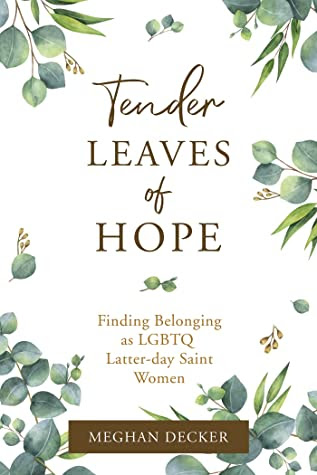
Meghan Decker's book, Tender Leaves of Hope: Finding Belonging as LGBTQ Latter-day Saint Women, was published this past April, by Cedar Fort, Inc. I've known Meghan for years, through church, but she came out as gay just last year. In her book, she shares her story of hiding her orientation throughout her life, until finally coming out to herself, later to her husband, and finally to her family. She includes insights from other LGBTQ women as well. The result is a frank discussion of what it looks like to be both LGBTQ and a committed member of the Church of Jesus Christ of Latter-day Saints.

I would describe Meghan as very introspective, and her book reflects this. Where Ben teaches through story, Meghan shares not only her story, but also her thought process, as she tries to figure out what life will look like as a gay Latter-day Saint. Her insights are a gift to the reader who is trying to learn how to support gay members of the Church.

Meghan's perspective is presented here:

I have heard Church members express their belief in the healing power of the Atonement of Jesus Christ for all afflictions and their subsequent confusion over the lack of "healing" for members who experience same-sex attraction. They are mistaken about what needs to be healed. I experience the healing power of the Savior as He takes away my shame, my fear, and my sorrow over my orientation. But as I stop viewing my orientation as an affliction, He is able to open my eyes to see the power and blessing and gift of it.

I know many people who are LGBTQ and devoted members of the Church. If faithfulness was a condition for becoming straight, they would qualify. I don't think God is intending to change my orientation. Instead, He is changing my understanding of who I am and the glorious future He has for me as a gay Latter-day Saint.

Meghan's website, with her blog posts and other writings, is Meghan Decker

* * *

These books, and others, are important, because they help us see our gay brothers and sisters as real people, with multiple dimensions, and not as some caricature portrayed by the media or by culture. Meghan wrote, 

Elizabeth says she would like to be open and honest because "people in church don't have much empathy for us, but they'll never develop it if they don't know about us."

As Brené Brown said, "People are hard to hate close up." These books help us to get closer to our brothers and sisters; to know them; and to love them as God does.


Friday, June 3, 2022

It's All Very Bleak

It's been ten days since the murder of nineteen children and two teachers, and the wounding of seventeen others, in Uvalde, Texas. Since then, there have been twenty more mass shootings (according to the Gun Violence Archive). In these additional shootings, seventeen persons were killed, and eighty-eight were injured. (In those ten days, if you count all shootings, and not just mass shootings, 499 persons have died, and 115 have been injured). 

That's a lot of people. Once again, I ask myself: why do people need guns? I understand that some are used for hunting. Some are used for target shooting. And maybe some are for self-defense (although having those guns in your home is more likely to increase the chance for accidental injury, homicide, and suicide than to protect you.)

Guns are really good at killing people - especially guns developed for the military, and guns modeled after them. Why does anyone need a weapon like that? I just can't wrap my head around it. 

I've realized that calling for "common sense gun legislation" is a non-starter. The immediate reaction seems to be "don't touch my guns" - even after the deaths of all those children in Uvalde, and the children who die from accidental shootings, and the children who die from domestic violence, and the children who die of suicide because a gun was handy. Accordingly, I'm trying to reframe my requests to be more specific, such as these from Moms Demand Action: background checks on all gun sales; red flag laws; safe storage laws.

Another outcome of this shooting is that I've lost confidence that we can rely on the police. It is painful to write those words; I've always had respect for police officers, and my own experiences with them have only been positive. But the officers in Uvalde appear to have done little to stop the gunman. It appears that they waited outside the classroom, doing nothing, for an hour. Meanwhile, children were calling 911, begging for help. I don't understand how these officers could just stand there, seemingly doing nothing. It breaks my heart. I find myself rehearsing in my mind all the stories of police (mis)behavior that I've heard, and I wonder: are bad cops actually the rule, and good cops the exception?

It is all very bleak, so here's a bleak haiku:

His anger aims the
gun. Children fall to the floor;
good guys wait outside.

Composite illustration of the 21 victims (Family handouts/Reuters)


Wednesday, May 25, 2022

The Remorseful Day

Checking my email this morning, I see that PBS has a video about the final season of Endeavour. The video, it turns out, is simply Shaun Evans (who plays Endeavour Morse) reading A.E. Housman's poem, How Clear, How Lovely Bright.

I guess that the poem is meant to describe the stages of one's life, from youthful hope to regrets in old age. But yesterday's events - the shooting deaths of 19 children and 2 teachers in Uvalde, Texas - lay heavy on my mind, and I heard the poem in that mindset. A child's day should indeed begin lovely bright, with glee - but it ought not to end in such remorse.

How Clear, How Lovely Bright
by A.E. Housman

How clear, how lovely bright,
How beautiful to sight
Those beams of morning play;
How heaven laughs out with glee
Where, like a bird set free,
Up from the eastern sea
Soars the delightful day.

To-day I shall be strong,
No more shall yield to wrong,
Shall squander life no more;
Days lost, I know not how,
I shall retrieve them now;
Now I shall keep the vow
I never kept before.

Ensanguining the skies
How heavily it dies
Into the west away;
Past touch and sight and sound
Not further to be found,
How hopeless under ground
Falls the remorseful day.


Thursday, May 19, 2022

Michigan's Spring Green

Spring in Michigan comes slowly. For a while, the trees wear just a hint of green, their leaves just starting to appear. Gradually they relax and open, until one day, we're out walking and discover a canopy of green.

Here's a haiku celebrating this annual miracle:

Softly, quietly, leaves unfurl, and we see trees waving their new green.

Kleinstuck Preserve


Tuesday, May 10, 2022

Let's Listen and Hear Each Other

 I recently read a quote by David Augsburger:

Being heard is so close to being loved that for the average person, they are almost indistinguishable. [fn1]

Such good advice. This requires that I set down my phone, my book, my knitting, my camera - whatever is claiming my attention - so that I can properly listen to and hear another person.

I wrote a haiku using this quote as a prompt:

Will you listen when
I tell my story? Will you
hear my joy and pain?

Just listen. Just hear. That's all.

Even beagle ears are for hearing

fn1: From his book, Caring Enough to Hear and Be Heard (Ventura, CA: Regal Books, 1983)

Friday, May 6, 2022

Knitting from Stash / Yarn Chicken

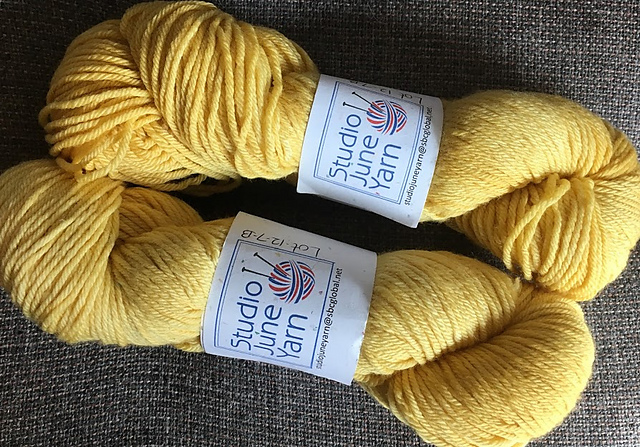
Over the years, I've acquired a good bit of yarn. I won't get into specifics; let's just say it's A Lot. Accordingly, I'm trying to ignore all the enticing yarn that I see on social media, and instead knit from my stash. My latest effort involved some beautiful yarn from Studio June Yarns, Squishy Soft Worsted:

Honey Mustard

National Forest

I used this to knit a baby blanket, using the Drifting Stripes 8-Hour Baby Blanket pattern by JoAnne Turcotte. This is a great pattern; it knits up fairly quickly, and creates a yummy blanket - thick and squishy, perfect for snuggling a fall baby.


I weighed the leftover yarn, and thought there'd be enough to knit the Pittsburgh Steelers Hat by Lorna Miser - although it might be close. I shortened the green ribbing, and still had to stop the colorwork early, because I'd run out of green yarn. But I think it turned out well in spite of losing yarn chicken:


Next up: another Musselburgh hat.

Sunday, May 1, 2022

Haiku Challenge, Part Three

Here are the last of my haiku for this April challenge. With that, the thirty-day challenge is complete. Maybe I'll continue with weekly haiku, but no promises!

April 23 - a weakness

A leaning tree will someday fall. Without support, you will break as well.

April 24 - a hope you have for your life I changed one word in this, from what I posted on Instagram, where "might" was "will." I also decided to capitalize "She." Big changes, I know.

@HumanHaiku shared this one (the original version, of course).

I don’t expect great things, but hope people might say, “She was always kind.”

April 25 - something you miss In the summer, we kids would gather at the Banks’s, to play roundsies in their front yard. This was a version of kickball, in which players rotated through the fielding positions and the kicking position. It was ideal since we never could muster enough players to field two teams. It was also disorganized and chaotic, and was, according to Mom, the reason Gene Banks gave up on trying to grow a decent lawn.

The evening game was for fathers, and our older brothers. In reality, this probably happened just once, but it looms large in my memory. I remember cheers for a good hit, and discussions of the latest Pirates game. I remember my father drinking from a bottle of beer, a rarity. I remember showing my mom, and Marge Banks, that I’d figured out how to tie my shoes. It's all a fond memory, a small bit of neighborhood community.

Summer days were for kickball. Nights were for baseball, for watching our dads.

April 26 - anger

This is the version I submitted:

I soon regret my angry words. Can I instead learn to practice peace?

But I prefer this version, with its slight modification; the words (intonation? emphasis?) sound better to my ears.

I soon regret my angry words. Can I learn to practice peace instead?

April 27 - something that delights you

The trees are spring green with buds, tiny promises of splendor and joy.

Spring green in one of our trees

April 28 - a hard thing you're going through

I weigh my struggles; against the world’s challenges, mine appear so small.

April 29 - peace
I was not happy with this, but it was late in the day, so I called it done, even though I cringe every time I read it.

The world can’t promise peace; for that, we must turn to  a higher power.

April 30 - who you are as a human, now 
I wrote so many versions of this! I had woken in a bad mood, and the haiku reflected that, ha ha. I finally came up with this, which was not as dramatically dark as the others.

Can an old dog learn new tricks? I think so; with age come new adventures

Our Bernie, enjoying his adventures