Today is my mother's birthday. She would have been 86 years old today, and I would have enjoyed celebrating the occasion. (If I were more on top of things, I'd have scanned a picture to share; instead, I'll refer you to the photo here.)
On my walk with Bonnie today, I listened to The Writer's Almanac, and learned that 70 years ago today, the first human life was saved with penicillin. I won't go into the details; you can read about it here.
It is interesting that the two events share the same day, since penicillin played a daily role in my mother's life. My mother had primary lymphedema, and one of the complications was frequent infections. My mother was active and involved in life, but the onset of an infection would send her to bed, delirious with fever and chills.
I remember the penicillin tablets - small white ovals, inscribed Lilly. My mother's name was Lillian (she went by Joyce, but that's another story), so although I knew the pills were manufactured by Eli Lilly, I thought of them as being named for her. She took them daily, in an effort to forestall infections.
And when that failed, as periodically happened, our good Dr Hoffmeister would show up at our door. He'd give mom an injection of penicillin, and she would be up and about in a day or so.
Our mother was the center of our home and family. I will always be grateful for our concerned and kind-hearted family doctor, and the wonder drug penicillin, for regularly helping our family regain its balance.
Wednesday, March 14, 2012

Wednesday, March 7, 2012
Spring Is Around the Corner
What a beautiful day it was - nearly 60 degrees when Bonnie and I took our walk. I love weather that requires a light jacket - that's my favorite.
And look what we stumbled across, growing in someone's yard, near the street:

And right by our house, a thick patch of snow drops:

Bonnie was not impressed by my delight in these flowers.
For contrast, here are some photos from February 24 (less than two weeks ago):
In keeping with the snow, I finally finished the reknit of Jim's scarf - he's worn it once or twice, but that may be it for this season!

And look what we stumbled across, growing in someone's yard, near the street:

And right by our house, a thick patch of snow drops:

Bonnie was not impressed by my delight in these flowers.
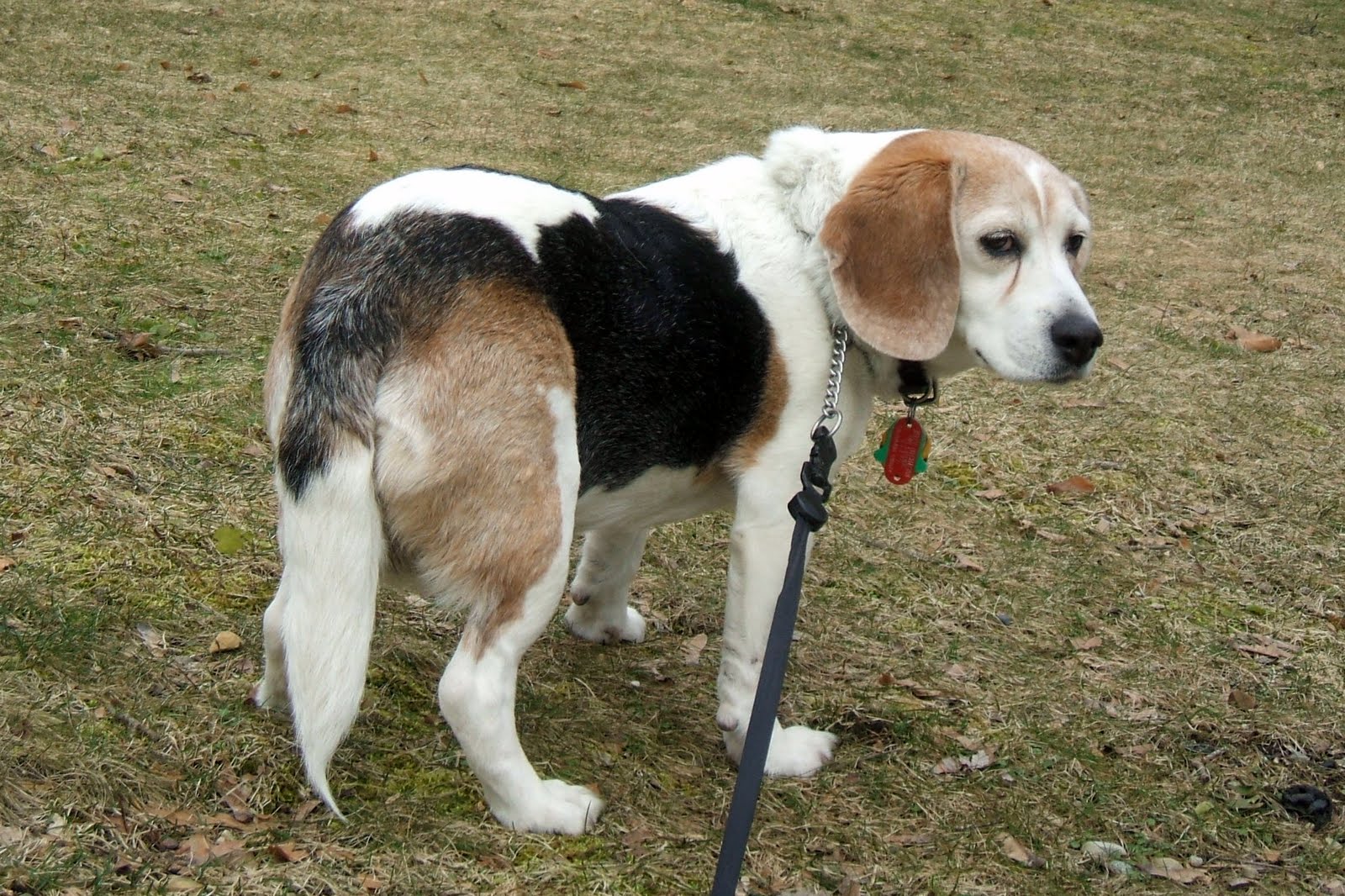 |
| Enough with the flowers, already! |
For contrast, here are some photos from February 24 (less than two weeks ago):
 |
| In the park, looking north |
 |
| Smells in the snow |
 |
| On Highgate Rd |
In keeping with the snow, I finally finished the reknit of Jim's scarf - he's worn it once or twice, but that may be it for this season!

Tuesday, March 6, 2012
The Lynching of Emmett Till

What triggered the murder was not known for certain - maybe he whistled at Carolyn Bryant, maybe he flirted with her, maybe he touched her. Bryant's husband, Roy Bryant, and his half-brother, J.W. Milam, were tried for the murder, and subsequently acquitted.
Christopher Metress edited the book, The Lynching of Emmett Till: A Documentary Narrative, in 2002. The book describes the incident through newspaper stories before, during, and after the trial. He includes letters written to different papers, and stories researched afterwards. There are excerpts from memoirs, and literary retellings of the murder.
I was struck by the horror of the killing; by the brutality and bullying of the murderers; by the lack of concern or guilt on the part of Southerners (at least some of them); and by the vocal reactions of Northerners.
Metress includes writings from Mrs Medgar Evers' autobiography, For Us, the Living (1967):
The Till case, in a way, was the story in microcosm of every Negro in Mississippi. For it was the proof that even youth was no defense against the ultimate terror, that lynching was still the final means by which white supremacy would be upheld, that whites could still murder Negroes with impunity, and that the upper- and middle-class white people of the state would uphold such killings through their police and newspapers and courts of law. It was the proof that Mississippi had no intention of changing its ways, that no Negro's life was really safe, and that the federal government was either powerless, as it claimed, or simply unwilling to step in to erase this blot on the nation's reputation for decency and justice. It was the proof, if proof were needed, that there would be no real change in Mississippi until the rest of the country decided that change there must be and then forced it (p 250).The courtroom drama was more than the trial of two men accused of murder. Mississippi, and the South, were on trial. As Mrs Evers suggested, the rest of the country needed to promote change; this event provided the momentum for that change, and was a catalyst for the civil rights movement.
Another telling selection was from the memoir of Anna Moody, Coming of Age in Mississippi (1968):
Before Emmett Till's murder, I had known the fear of hunger, hell, and the Devil. But now there was a new fear known to me - the fear of being killed just because I was black. This was the worst of my fears. I knew once I got food, the fear of starving to death would leave. I also was told that if I were a good girl, I wouldn't have to fear the Devil or hell. But I didn't know what one had to do or not do as a Negro not to be killed. Probably just being a Negro period was enough, I thought (pp 254-255).At the same time, there were those who continued to defend Mississippi and the South, as in these letters to the Memphis Commercial Appeal.
... there is a certain element that will stop at nothing to humiliate and discredit the South and any other section (and there are other sections) who are trying to preserve the integrity of the white race (p 146).and
However much we deplore such a crime as that alleged which caused young Till to disappear, let it be known that it will be a long time before Southern people will be silent and submissive in the face of agents who insult and try to hurt womanhood.As I read Metress's book, I often wondered what my parents made of all this. They were a young family, with a nearly four-year-old boy, and a baby with some health issues. They lived in a trailer park in Minnesota, where my father managed the equipment on a construction site. They visited doctors, and made a trip to the Mayo Clinic with their baby, and worked, and cared for each other. Did they even follow the story of the trial? How did they react? What did they think?
Any society for the advancement of Negroes can profitably exercise itself with the inculcation of morals and the strengthening of their social customs (p 148).
The anthology includes a poem by Richard Davidson, A Cause for Justice. Its verses go back and forth, between the description of Mr. and Mrs XX, spectators at the trial, and the memories that linger near the grave of Emmett Till. Here are excerpts from the poem (pp 299-300).
Mr. and Mrs. XX settle down in their easy chairsThe benefit of books such as this is that they don't let us forget.
And guests pop in for a few good drinks and talk
About the trial and notice how the weather is and the
Fact that the defense attorney was quite interesting
And didn't Mrs. XX look fine in that autumn hat and was there
Really a reporter from Time there?
And what was all the shouting about and if there was a crime
Certainly it would have come out in the proceedings.
Mr. and Mrs. XX nod happily and yawn and it's been a long, long day
And they wonder secretly if pictures were taken and were
They seated in the right place?
They would purchase the morning papers and see.
Mr. XX goes to the front door, says goodnight, locks it, smokes a final cigarette,
and walks casually to bed.
To his wife's arms and to sleep and to forget.
. . .
We will not forget Emmett Louis Till
In tomorrow's problems or last week's good news.
We will not forget him in breakfast food
Or in the rush of winter bells.
We promise the voice that commands our attention
The earth that was his earth
Will not wilt and die in a quick hour's decision.
Tuesday, February 21, 2012
Half the Sky: Turning Oppression into Opportunity for Women Worldwide

In May 2011, Kristof came to Kalamazoo, and spoke at Kalamazoo College. I missed this event (to my regret), but later read in the Gazette about his presentation. I saved that article, and eventually came across it again, while straightening the disaster that is my office. I finally was motivated enough to find and read a copy of "Half the Sky."
It is a great book, and I strongly recommend it.
Kristof and WuDunn present, bluntly and objectively, examples of oppressed women: young girls who are kidnapped and sold to brothels; women who are controlled by rape and beatings; honor killings; deaths in childbirth (one death every minute); campaigns that eliminate reproductive health funding; gender discrimination; lack of education.
The stories they share are shocking. (Frankly, if I were trying to make up stories to emphasize a point, I wouldn't come up with these - I'd be afraid no one would believe them.) They take a general problem, and link it to a specific individual, with a name. Du'a Aswad dies in an honor killing, murdered by a crowd of one thousand men. Prudence Lemokouno dies in childbirth, unable to receive necessary medical treatment. Meena Hasina, age 12, is forced to work in a brothel.
The authors go on to share solutions, and to discuss what works, and what doesn't work. They do not inflate statistics, or claim success where none exists. But they do offer hope that oppression can be lifted.
They point out unexpected consequences. For instance,
in 1993, Senator Tom Harkin wanted to help Bangladeshi girls laboring in sweatshops, so he introduced legislation that would have banned imports made by workers under the age of fourteen. Bangladeshi factories promptly fired tens of thousands of these young girls, and many of them ended up in brothels and are presumably now dead of AIDS" (p. 17).In another example, funds were cut off to Marie Stopes International, because this group was helping to provide abortions in China.
One might have understood cutting funds to the China program, but slashing funds for the consortium in Africa was abhorrent.The authors write about the progress of women in China; indeed, they claim that "no country has made as much progress in improving the status of women as China has" (p. 208). And they point out something - another unexpected consequence - that surprised me, and has made me rethink some of my ideas regarding imports:
The funding cut forced Marie Stopes to drop a planned outreach program to help Somali and Rwandan refugees. It had to close two clinics in Kenya and to lay off eighty doctors and nurses. . . "These were clinics focusing on the poorest, the marginalized, in the slums" (p. 131-132).
Implicit in what we're saying about China is something that sounds shocking to many Americans: Sweatshops have given women a boost. Americans mostly hear about the iniquities of garment factories, and they are real - the forced overtime, the sexual harassment, the dangerous conditions. Yet women and girls still stream to such factories because they're preferable to the alternative of hoeing fields all day back in a village. In most poor countries, women don't have many job options. In agriculture, for example, women typically aren't as strong as men and thus are paid less. Yet in the manufacturing world, it's the opposite. The factories prefer young women, perhaps because they're more docile and perhaps because their small fingers are more nimble for assembly or sewing. So the rise of manufacturing has generally raised the opportunities and status of women (p. 210).The last chapters of the book suggest things that ordinary people like you and me can do, to help in this cause. They reiterate the benefits of educating girls, and of funding health programs. They also reiterate broader principles, such as
American feminism must become less parochial, so that it is every bit as concerned with sex slavery in Asia as with Title IX sports programs in Illinois. . . Likewise, Americans of faith should try as hard to save the lives of African women as the lives of unborn fetuses (p. 244).I think reading this book is a very good place to start.
Saturday, February 18, 2012
Saturday Stuff
As usual, I enjoyed Heather's Five Things for Friday post. I am trying to write a similar weekly post, but it didn't work out this week - it was just too hectic to squeeze a post in. Maybe next week - but maybe not; maybe my Five Things will be more sporadic posts. We'll see!
Anyway, here are Five Things for Saturday instead. :)

Anyway, here are Five Things for Saturday instead. :)
- 1 -

I wandered into the living room this morning, and discovered this "pair" of Jim's shoes. Interesting fashion statement...!
Bonnie has started to need a middle-of-the-night potty break. Homer used to do this, and it got so I would wake the instant he stirred, and pick him up and carry him to the door - he was old, and just wouldn't make it in time otherwise.
This time around, Jim is the one who wakes up and lets Bonnie out (and happily, she doesn't yet have Homer's urgency). I sleep right through it all. Jim fishes around in the dark for his slippers, and this is what he came up with last night. It made me smile this morning. And it reminded me how grateful I am that he loves our beagle girl as much as I do.
 My mitten knit-along has been a bit of a challenge. I mentioned in my last blog post that I'd had some gauge issues. I finally got gauge (more or less) using a size 4 (!) needle.
Then I started to knit the first clue. The cuff starts with a Latvian braid, and it was So Cool. It was also So Huge. Gigantic!
So, I ripped out and went down a needle size. Then I frogged again and went down another needle size. I am now using size 0 (!) - which is what I would have guessed I needed, if I hadn't bothered to swatch. I think this will work out. I'm hoping for some knitting time later this evening, and maybe I can finish up this clue, and begin the second (which came out Thursday). I'll post pictures when the cuff is finished.
This time around, Jim is the one who wakes up and lets Bonnie out (and happily, she doesn't yet have Homer's urgency). I sleep right through it all. Jim fishes around in the dark for his slippers, and this is what he came up with last night. It made me smile this morning. And it reminded me how grateful I am that he loves our beagle girl as much as I do.
- 2 -
Interesting program at church today. Our Relief Society president and High Priest group leader organized a workshop for members 55 and older, Provident Living for Seniors. I admit that I was skeptical at first, but this first meeting seemed to have the goal of pointing out all the things we ought to be thinking about - and they succeeded with me! I'm looking forward to next month's get together (March 17, if you're in the area).
- 3 -

Then I started to knit the first clue. The cuff starts with a Latvian braid, and it was So Cool. It was also So Huge. Gigantic!
So, I ripped out and went down a needle size. Then I frogged again and went down another needle size. I am now using size 0 (!) - which is what I would have guessed I needed, if I hadn't bothered to swatch. I think this will work out. I'm hoping for some knitting time later this evening, and maybe I can finish up this clue, and begin the second (which came out Thursday). I'll post pictures when the cuff is finished.
- 4 -
I particularly enjoyed this blog post: A Latter-day Voice: "I'm Doing the Best I Can!" The world is so judgmental; this approach - "let's assume people are doing the best they can" - is a welcome breath of fresh air.
This quote from President Hunter (from April conference, 1992), seems appropriate:
We need a more peaceful world, growing out of more peaceful families and neighborhoods and communities. To secure and cultivate such peace, ‘we must love others, even our enemies as well as our friends.’ ... We need to extend the hand of friendship. We need to be kinder, more gentle, more forgiving, and slower to anger. We need to love one another with the pure love of Christ. May this be our course and our desire.
- 5 -
Another blog post that I want to share: Diving for Pearls: Joy, or "Just Wait?". I love Katie's list of joyful moments that new parents can look forward to, instead of dreading.
When I read this post the first time, I thought of a little guy I know - almost two - and how much fun it is to just watch him in action. He delights in everything, and it makes me smile. Recently, I was using his mom's swift and ball winder to wind some yarn (don't know what those are? look here). He was amazed - he stood there, watching the swift, then the ball winder - back and forth, each time pointing with wonder, "Look!"
There is joy everywhere you look.
When I read this post the first time, I thought of a little guy I know - almost two - and how much fun it is to just watch him in action. He delights in everything, and it makes me smile. Recently, I was using his mom's swift and ball winder to wind some yarn (don't know what those are? look here). He was amazed - he stood there, watching the swift, then the ball winder - back and forth, each time pointing with wonder, "Look!"
There is joy everywhere you look.
Sunday, February 12, 2012
Update: Four Knitting Projects
- 1 -

I finished the latest Elijah! Baby BJW now has his elephant, although of course, he is too young to appreciate the lovely colors (Misti Alpaca Pima Cotton & Silk Hand Paint - color CSP11, April Showers), or the fact that the eyes actually match this time. But I think this is my cutest elephant yet.
- 2 -
Jim's scarf is progressing nicely. There is really not much else to say about that project. I have been steadily working on it, during odd moments here and there. The scarf is slowly getting longer, while the ball slowly gets smaller.
- 3 -
The shawl, on the other hand, has had some serious ups and downs. A couple weeks ago, it was moving along nicely. But there were these two stitches, kind of hanging out on their own, that just seemed out of place. I felt that something was amiss, and posted a question on Ravelry. And then, I immediately answered my own question - I'd been making a mistake on every row 1 of the repeat.
There was nothing for it - I had to frog the entire thing and start over. So I did that, started over, and was again making forward progress.
Friday night, I was swatching for another project (see below), and looked over at Bonnie. She was playing with something - it looked long, like a dog collar, so I got up, to see if she'd gotten her collar off or something. Imagine my surprise to discover she was playing with my shawl! Or maybe she wasn't playing - maybe she was just trying to get untangled; at least, that's what I'm hoping. I'd been keeping it on the fireplace hearth; now it's on the piano.
I checked it quickly Friday night, and twice yesterday, more carefully, in the light of day. I can't see any damage, so it looks like I lucked out on this one.
- 4 -
I had thought that once I finished Elijah, I'd zip along on the shawl. But no; another project caught my eye. I've joined the Mittens for Me! Mystery KAL. KAL stands for Knit-ALong. The mystery is that we've signed onto this project without actually knowing what the finished project will look like. It will be mittens, of course. The yarn is fingering weight, so they'll be finer than traditional worsted weight mittens. Two colors are used, so there will be some colorwork involved.

Friday night, I swatched, first with size 0 needles, then with size 1.5. The goal was 7.5 stitches per inch. I was measuring about 6.5 or 7 per inch, which was pretty close.
Then, when I was reading the first clue today, I realized I had done the pattern wrong for my swatch - instead of K2 P1, I'd done K1 P1. And then, when I was reading posts from other knitters, I realized that my purls were 'hidden' behind the knits, and I was, in fact, only counting the knits. So my gauge is really something like 13 or 14 stitches to the inch - oops!
So... back to swatching, with the right pattern, and a larger needle size. What can I say?!?
Friday, February 3, 2012
Five Things for Friday: A Random List
- 1 -
I am busy at work these days, with some aggressive deadlines. At one point yesterday, I was feeling totally overwhelmed. I picked the first item on my list, made a phone call, and found that talking with my coworker to decide how to handle that issue was very satisfying, and I went on to make good progress on other tasks. Ended the day feeling positive, and today went equally well. I need to remember:
Q: How do you eat an elephant?
A: One bite at a time.
- 2 -
Punxatawney Phil saw his shadow yesterday, meaning we have six more weeks of winter. It's hard to complain about that - we've had such a mild winter. Yesterday I walked Bonnie at lunch; it was sunny, a pleasant 45 degrees, and simply lovely. We walked a tad longer than usual, enjoying the springlike weather.
I read that one day in January, 1967, Kalamazoo's temperature reached 60. Two days later, the city had the biggest snowstorm in its history: 28 inches of snow in two days. I also read that, because Lake Michigan is nearly ice-free this year, we are "open for lake effect snow in February, whenever an arctic blast moves across the lake." Clearly, it won't do to become complacent regarding the weather.
On Groundhog Day, I like to watch the delightful (and cleverly named) comedy, Groundhog Day. In her Five Things for Friday post, Heather shares her family's unusual Groundhog Day tradition - check it out.
- 3 -
I have two books on the desk that I have read, for which I want to write reviews. It always takes me a while to gather my thoughts and find the right words (especially for books of poetry), so for now I'll just name names: Half the Sky: Turning Oppression into Opportunity for Women Worldwide, by Nicholas D. Kristof and Sheryl WuDunn, and House Where a Woman, poems by Lori Wilson. I enjoyed both, and hope to share my thoughts in the relatively near future.
I'm reading The Lynching of Emmett Till: A Documentary Narrative, edited by Christopher Metress. I've barely started, but it promises to be interesting (if I can just find time to read...)
- 4 -
I'm also struggling to find time to knit. Elijah, the elephant for my young friend (who arrived on Sunday, hurrah; mother & child are both fine), now has two arms & two legs, and part of one ear. And the shawl got its weekly allotment of knitting as well. Slowly but surely...
Knitting tonight! Hoping to finish an ear, maybe two...?
- 5 -
It is rare that Jim & I are in sync with the rest of the country, television-wise, but we have definitely joined the Downton Abbey bandwagon. Such a terrific series! We record the episodes, and Jim likes to put off watching as long as possible, savoring the anticipation. I, on the other hand, like to dive right in. We try to compromise somewhere in between.
And coming up soon is another of our favorites: the annual Westminster Kennel club dog show. We talk about going to New York someday, to mingle with dogs and dog people, and enjoy the show in person. (It's on my bucket list!)
Subscribe to:
Posts (Atom)